
Restore, don't replace
Natural Stone Restoration
Travertine, terrazzo, and limestone cleaned, honed, polished, and sealed across Lake Mary, Sanford, and greater Orlando. Stone rarely needs replacing. It needs the right products and a process that won’t etch it, which is not the same job as cleaning tile.
We’ll lay a demo section on your own floor, in your own lighting, before you commit to anything.
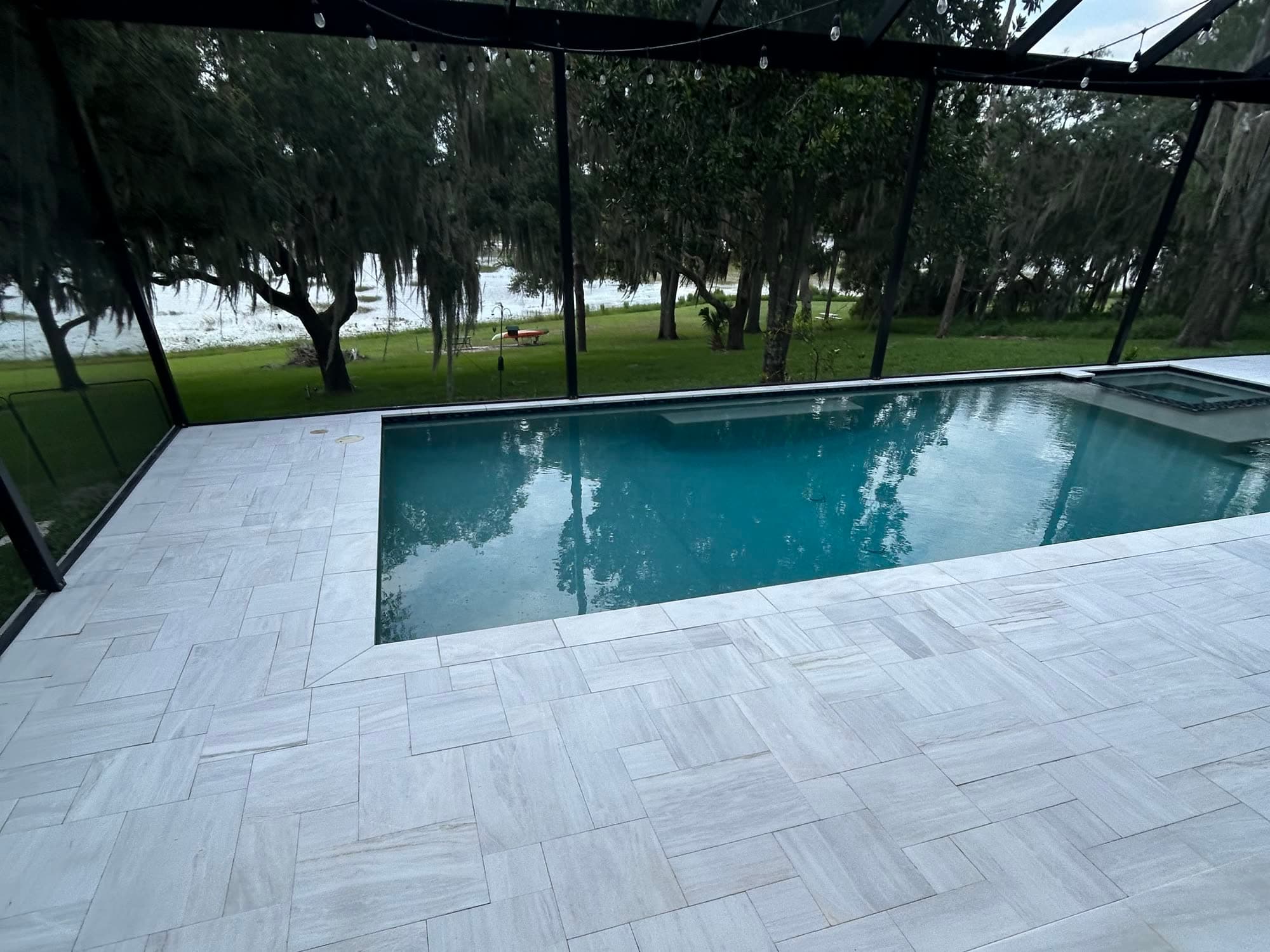
Stone we work on
Travertine
Cleaned, honed, sealed, and re-sanded where the joints have washed out. Indoors and on pool decks and patios.
Marble
Including sandblasted and honed finishes. Cleaned, joints refilled, loose pieces reset, then sealed.
Terrazzo
Chips set in cement or epoxy, ground and polished back to an even surface. Common in older Florida homes and commercial floors.
Limestone
Soft, porous, and easy to damage with the wrong product. Deep cleaned, then sealed once the floor is completely dry.
How it works
Test
We check what the stone is and how absorbent it is before any product touches it.
Deep clean
Truckmount extraction and the right pad for the stone, not an acidic tile cleaner.
Hone or polish
Abrasives bring the finish back mechanically. The shine is the stone, not a coating.
Seal
An impregnating sealer soaks in below the surface. Backed by our 2-year warranty.
The proof
Before & after
Real stone jobs from around Lake Mary, Sanford, and Central Florida. Drag the slider on the first one.
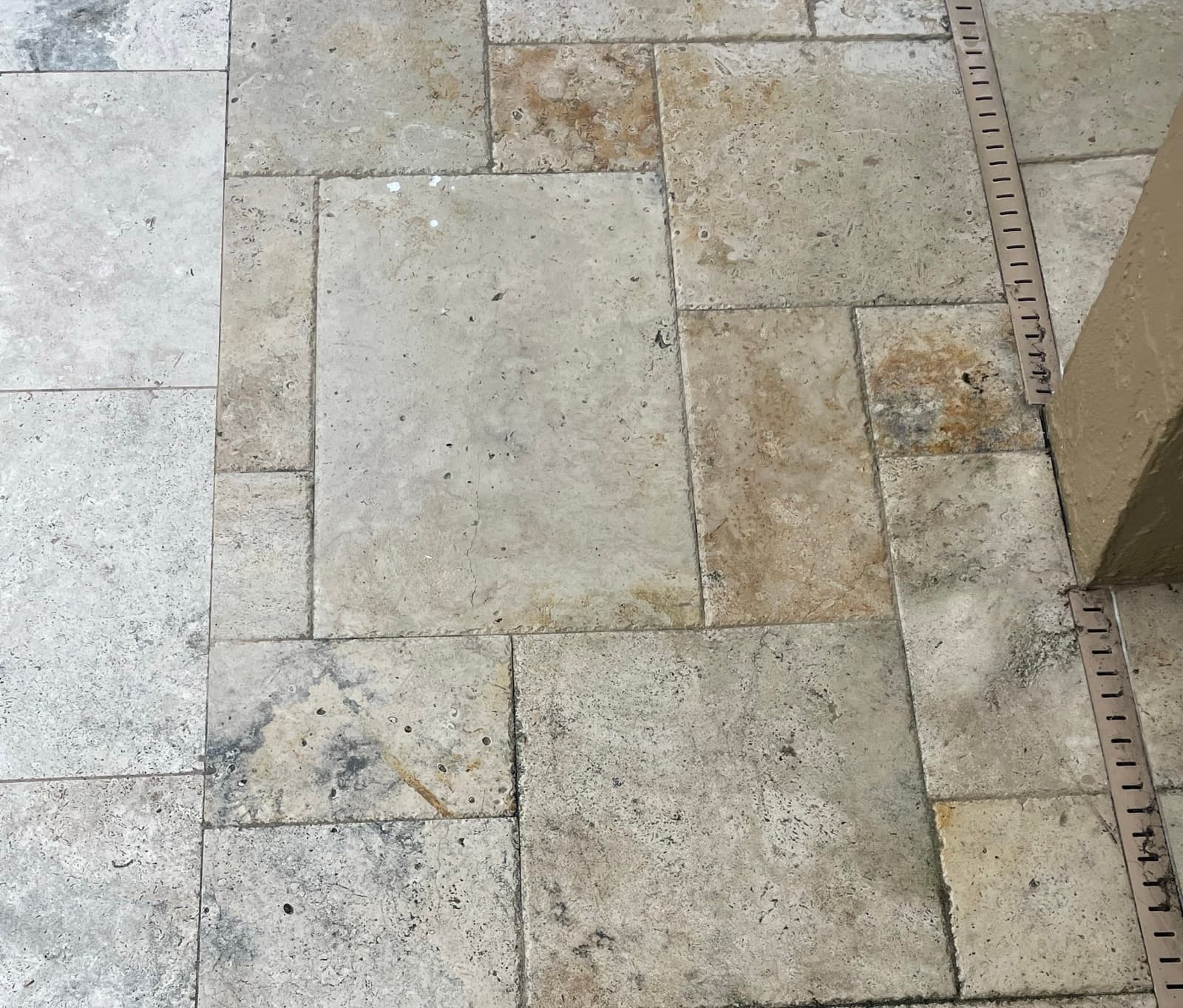
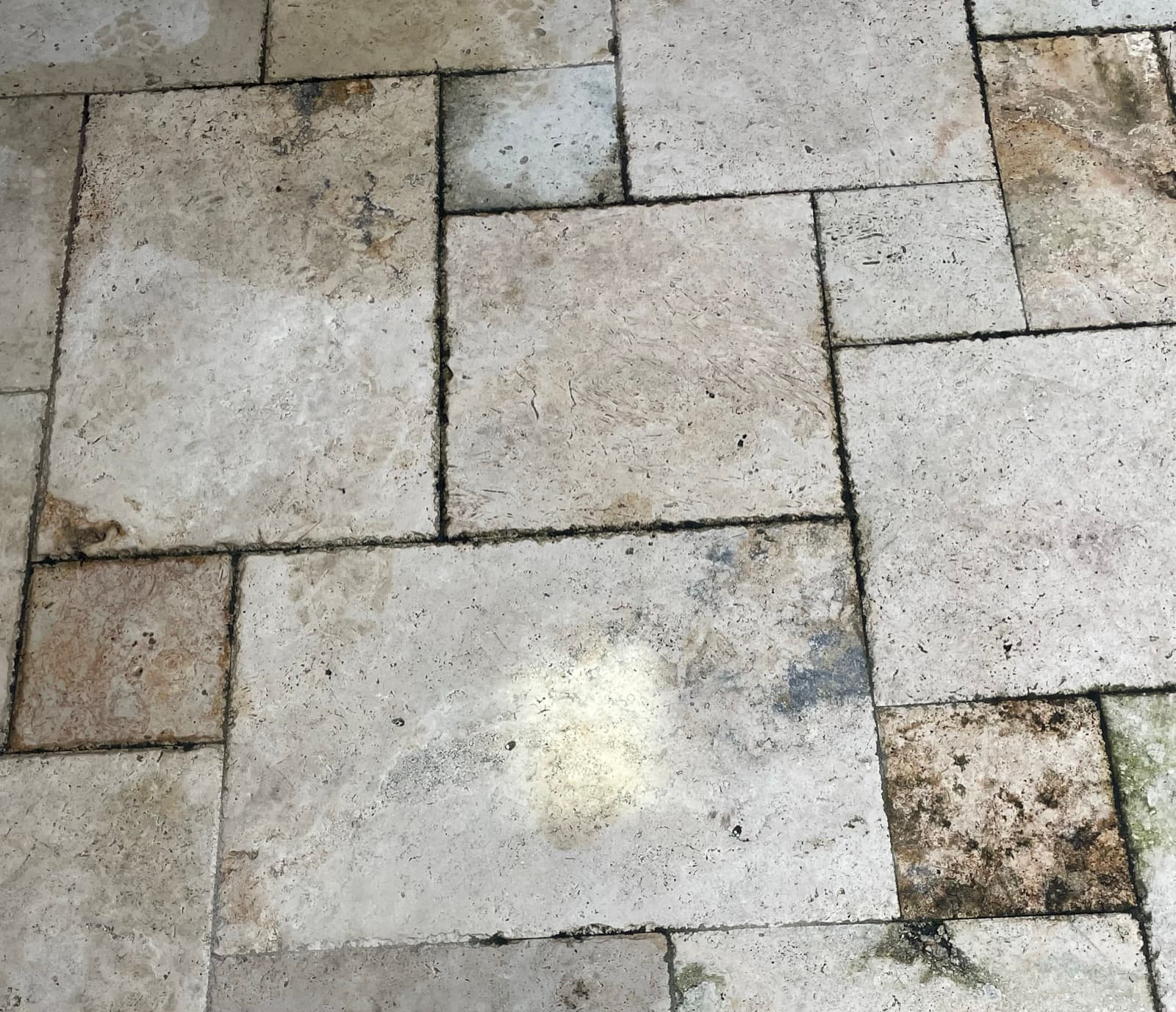
Travertine cleaning & sealing · Central Florida
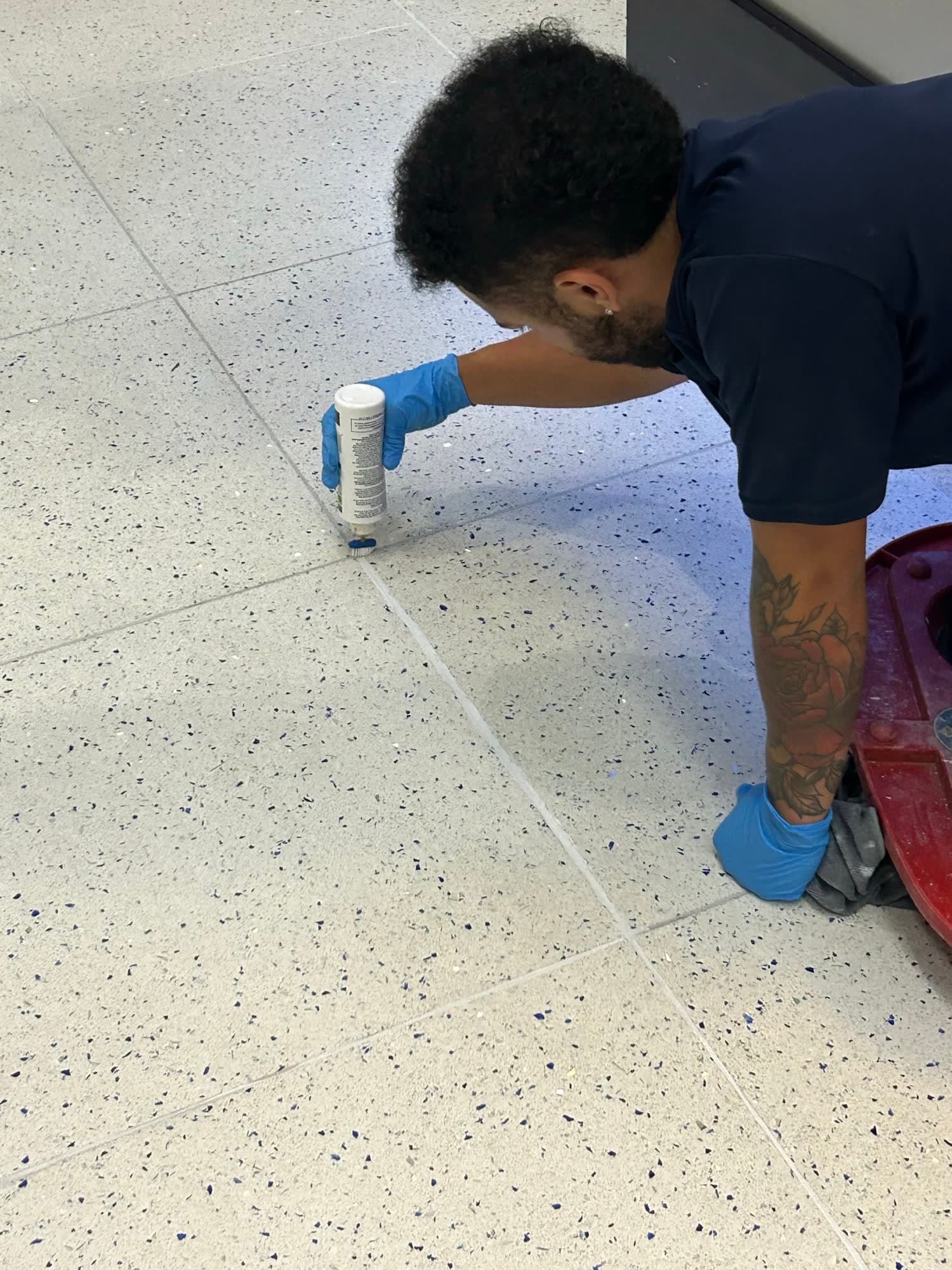
From the job site
What we’ve learned doing this since 1997
Things worth knowing before you hire anyone for stone, us included.
The patch under your furniture is the real color
Pull a couch off a stone floor that's been in place a few years and you'll see a clean rectangle. That patch never took foot traffic and never took sun. It is what the rest of the floor used to look like.
Most people have stopped seeing the change, because soil builds up a little at a time over years. There's no day where the floor looks dirty. It just gradually stops looking like stone.
That rectangle is also the honest target. We're not trying to make your floor look like a showroom photograph, we're trying to get the walked-on parts back to matching the part that was protected.
It's worth looking before you call anyone. If the two areas already match, your floor is in better shape than you think and you may only need sealing.
Stone doesn't get cleaned like tile
Travertine, marble and limestone are all calcium carbonate. Acid dissolves them. That includes vinegar, and it includes most of what's sold as a general floor cleaner.
Porcelain and ceramic tile don't care, which is why acidic products are common in tile work and why a company that mainly cleans tile can quietly ruin a stone floor without meaning to.
The damage doesn't look like a stain, it looks like dullness. Etched stone has had its surface eaten, so it scatters light instead of reflecting it. No amount of further cleaning brings it back; it has to be honed out mechanically.
So the first thing worth asking anyone quoting on your stone is simply what they're going to put on it.
Stone joints wash out, and they get refilled
On a deck or patio set on sand, the joints between the stones are not permanent. Rain moves the sand, and a pressure washer held too close will strip a joint out in one pass.
Once a joint is empty the stone either side of it has nothing holding it, so it starts to rock. That is how a deck goes from a cleaning job to a repair job, and it happens quietly.
So before anything gets sealed, the joints get swept full again with silica sand, worked in until they are level with the stone. The sand shade matters more than people expect, because you see it in every line across the whole deck.
If someone is quoting you to clean and seal a paver or stone deck, ask whether re-sanding is included. Sealing over empty joints locks in the problem.
Cleaning is usually half the job
On this sandblasted marble deck the cleaning was maybe half of it. A stair had worked loose and was cemented back into place. One tile was moving and had to come up and be reset. The joints were washed out and were re-sanded. Then the whole surface was sealed.
Clean around a loose stair and a rocking tile and you have not fixed anything. You have just made the damage easier to see.
The footage was shot after the sun went down, and that was deliberate. Direct sun blows out a sandblasted finish completely; the stone reads as flat white and you cannot see anything. In lower light the natural color and the veining come back.
It is worth knowing if you are looking at anybody's before-and-after photos, ours included. A bright, sunlit after shot is doing some of the work for the contractor.
Why we wait for the floor to be completely dry
An impregnating sealer works by soaking down into the pores of the stone and lining them, rather than laying a film across the top.
If there's still moisture in those pores, the sealer has nowhere to go. It sits on the surface, dries there, and you get patchy coverage plus a haze in the spots where it pooled.
So the floor has to be dry all the way through, not just dry to the touch. On a dense stone in Florida humidity that can mean waiting rather than finishing the job the same hour.
It's the least visible part of the process and the part most likely to get skipped when someone is trying to be out by lunchtime.
Common questions.
See the difference on your own floor first
Free, no-obligation estimate, and we'll clean a demo section of your stone before you decide anything.